Introduction
 
"Thousands upon thousands of pieces of cheap china must have been smashed to bits in order to furnish sufficient material to decorate this curious structure .......... though the material in tawdry the effect is indescribably wonderful."
Young, 1898
 
Built in the 19th century, the Temple of Dawn (Wat Arun) is the most famous temple in Bangkok. It has enchanted many people, from explorers of the olden days to modern tourists. The temple which dates from the Ayutthayan period, is a cherished symbol of Bangkok. The temple appears on the logo of the Tourism Authority of Thailand.


The Story of Wat Arun
 
One dawn in 1768 when King Takshin planned to move the capital from Ayutthaya to Thonburi, he travelled down the Chao Phraya River by boat. At dawn, he and his entourage arrived at an old temple and he came ashore to pay his respects. He later named the temple Wat Jang, meaning the Temple of  Dawn. It was later renovated by King Rama I and King Rama III and the temple became known as Wat Arun whilst Thonburi was the Thai capital.
 
Interesting Objects Around the Compound of Wat Arun
 
The Central Prang
 
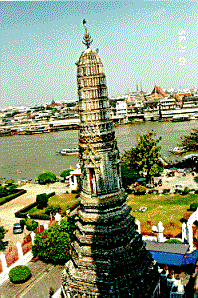
The prang which is built in late Ayutthaya style, is the tallest prang in Thailand. It is completely covered with cheap Chinese porcelain from broken pots donated to the temple. Rows of yakshas surrounding the prang appear to be supporting the prang. Porcelain floral motifs and stucco kinaris also decorate the prang. The niches nearing the upper part of the prang contain statues of the god Indra riding on his three headed elephant, Erawan. A staircase leads up to the upper platform of the prang which can be climbed for views of the river and sprawling Bangkok.
 
 
The Corner Prangs
 
The corner prangs are smaller than the central prang and their niches contain statues of Phra Pai, the Brahmin god of wind. The central prang represents Mount Meru, the mythical mountain where the gods dwell according to Hinduism, and the four corner prangs represent the mountains surrounding Mount Meru.
 
 
Pavilions
  
At the foot of the prangs, Buddha images in four pavilions depict the birth, enlightenment, first sermon and death of the Buddha.


Yakshas of Wat Arun
 
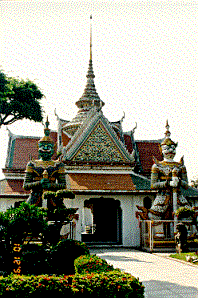
A song every Thai child sings tells how the yaksha of Wat Po fights the yaksha of Wat Arun. Here, the yakshas of Wat Arun stand guard in front of the entrance to the bot of Wat Arun.
 
 
The Kathin Ceremony
At the end of the rainy season, the King makes a traditional visit to Wat Arun to present new robes and gifts to the monks in a solemn ceremony called Kathin. In the past, the event was accompanied by a glorious procession of royal barges but this now occurs only once in a few years.


 Another magical dawn at Wat Arun, the Temple of Dawn
 
 
Copyright © 1998, by The Thailand Collection